
Will tariffs impact event F&B prices? Could tightened immigration policies worsen hotel staffing shortages? Keeping up with the wave of executive orders and policy changes under the new presidential administration is challenging enough as is, but for event planners, there's an added pressure of gauging whether these issues will impact their gatherings — and if so, are their venue contracts properly worded to protect them?
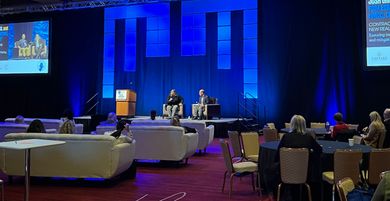 Pam Esbrandt Wynne (left) and Joshua Grimes (right) share tips for improving event contracts during an educational session at the MPI NJ MEETS Conference. Photo Credit: Elise Schoening
"We're living in interesting times," said Pam Esbrandt Wynne, HMCC, CMM, CMP, during a panel discussion at Meeting Professionals International New Jersey Chapter's annual MEETS Conference, held Feb. 24-25 in Atlantic City. "We can all admit, regardless of where you end up on the political spectrum, that our world in meetings and events travel is affected. There's a lot happening and there's also a lot of anxiety and uncertainty right now in our industry."
Planners who specialize in government meetings have had their gatherings cancelled immediately amidst cuts to federal budgets and the workforce, as well as for the perception of DEI-related content. But for those in the private sector, the impacts might not be as instantaneous and clear-cut.
In the panel discussion, Wynne and attorney Joshua Grimes, Esq. attempted to ease planners' anxieties about hosting gatherings in a changing political landscape, and offered tips for enhancing event contracts to safeguard against such issues.
Addressing price increases
Research from Northstar Meetings Group's PULSE Survey shows higher costs of goods and services remain planners' No. 1 concern. For those who worry that inflation and tariffs could push prices even higher, Grimes suggested building price caps or discounts directly into meeting contracts.
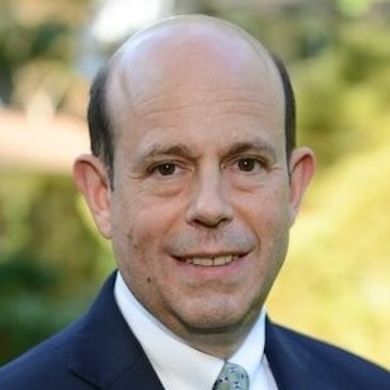 Joshua Grimes, attorney at law and president, Grimes Law Offices
"The price of food and beverage has gone up exponentially and it seems to keep going up," said Grimes. "Maybe you can agree on a cap increase of 3 or 5 percent a year. Or maybe you agree that the venue publishes pricing at the time of the meeting and you will get a certain discount percentage off of that."
Grimes also recommends clarifying exactly what service, administrative and other fees you agree to pay and what the cost is for each. Any terminology of fees being subject to change should be replaced with an exact or maximum amount. It's especially important to get these numbers finalized before the ink dries.
"What do you call it before the contract is signed? We call it negotiating," said Wynne. "What do you call it after the contract is signed? We call it begging."
Preparing for staffing and security issues
Also top-of-mind for planners is staffing. According to research from the American Hotel & Lodging Association, 65 percent of hotels are understaffed, with an average of six to seven open positions per property. Most hotels reported shortages in housekeeping (38 percent), front desk (26 percent), culinary (14 percent) and maintenance roles (13 percent).
Staffing needs and expectations can vary from group to group. Planners of luxury events might require daily housekeeping, while others are more concerned with making sure there is ample staffing for bar and food service. Whatever the group's needs, Grimes emphasized the importance of specifying it in the contract.
"If you need to have a certain level of staffing, put in your contract what your needs are. Otherwise, you're leaving it up to reasonableness," he said.
Similarly, planners should consider their security needs. Some organizers might want to add a clause to their contract that prohibits the venue from also hosting a rival or conflicting group over the same dates.
"It used to be that if you book a meeting, there was an unwritten rule that there won't be certain groups in the venue at the same time. But now there's generally no obligation to not book another group unless it's in the contract somehow," Grimes said, citing a 2023 incident where a downtown Philadelphia hotel hosted a Jewish conference during the same time as the right-wing Moms for Liberty group.
"Every group needs to think realistically about whether you need security because of your speakers or your content," he said. "Even if it's not because of a disruption, do you have confidential information that's being shared?" Planners should note, however, that providing and paying for security will likely be their responsibility unless negotiated upfront into the contract.
Navigating DEI
President Trump's rollback on DEI initiatives applies only to government programs and meetings, so planners in other sectors can continue to incorporate principles of diversity, equity and inclusion into their gatherings — but they'd be wise to get commitments from their venue and vendors in writing.
"We've seen a backtracking on DEI and it's been scrubbed from some organizations," said Grimes. "It's important to ask your vendors and the venues where you're meeting how they're going to help you meet the needs of your group. You can't just assume."
For example, if your group will require gender-neutral bathrooms, it's best to have that specified in the contract — as long as the state doesn't have a "bathroom bill" that prohibits doing so. Planners can also add clauses for supplier diversity metrics and goals.
"If your organization has goals for minority hiring and women-owned business hiring, you can still do that," said Grimes. "It's all perfectly legal. It's just that you're not seeing the endorsement from the federal government that we used to see."
Revising the force majeure clause
Force majeure clauses became much more restrictive following the pandemic, but that doesn't mean planners shouldn't try to negotiate them.
.jpeg?tr=w-390%2Cfo-auto "Pam Esbrandt Wynne, principal, PamWynne LLC") Pam Esbrandt Wynne, principal, PamWynne LLC
Pam Esbrandt Wynne, principal, PamWynne LLC"Force majeure is not some magic clause that we all just kind of wave and go, 'OK this is the one we're using,'" said Wynne. "It's an individual negotiation."
Both panelists encouraged planners to carefully review and revise their force majeure clauses to better protect them against current and future threats. This means shifting towards more general language for disease, war, civil unrest, etc. It's also wise to add a line about the purpose of the meeting to the top of the contract, accompanied by phrasing that would allow for cancellation if the purpose is unable to be fulfilled.
Another top tip is to include terminology for cancellation if the conditions for hosting the meetings are "illegal," "impossible" "inadvisable" or "commercially impractical." Grimes noted that getting all four words into the contract might be ambitious, but planners should at least push to have three of them featured in their force majeure clause.
Below is a sample force majeure clause that Grimes recommends for his clients:
The performance of this agreement by either party is subject to: acts of God, law, regulation, statute or order of a governmental organization; disaster; war; civil unrest; labor disputes (except those involving employees, contractors or agents of the party seeking to invoke this provision); disease (including but not limited to Covid-19 or any variant thereof), epidemic or pandemic; issuance of a travel advisory related to the region in which the meeting is located, or cautioning against group gatherings and/or nonessential travel generally, by a recognized organization; acts of terrorism, or issuance of an NTAS bulletin or alert declaration of an "imminent" or "elevated" threat of terrorist attack by the U.S. Department of Homeland Security, advising against travel or meetings, and related (directly or indirectly) to the meeting location (or an area that includes the meeting location); issuance of a level 3 or 4 travel advisory (or comparable caution against nonessential travel) by the U.S. Department of State (or other nation's government where more than 5 percent of the group's anticipated attendees reside) related to the region in which the meeting is located or travel thereto; frustration of purpose of the meeting; or other cause beyond the parties' reasonable control; any of which makes it illegal, impossible, inadvisable, or commercially impractical to perform as contracted under this agreement.